
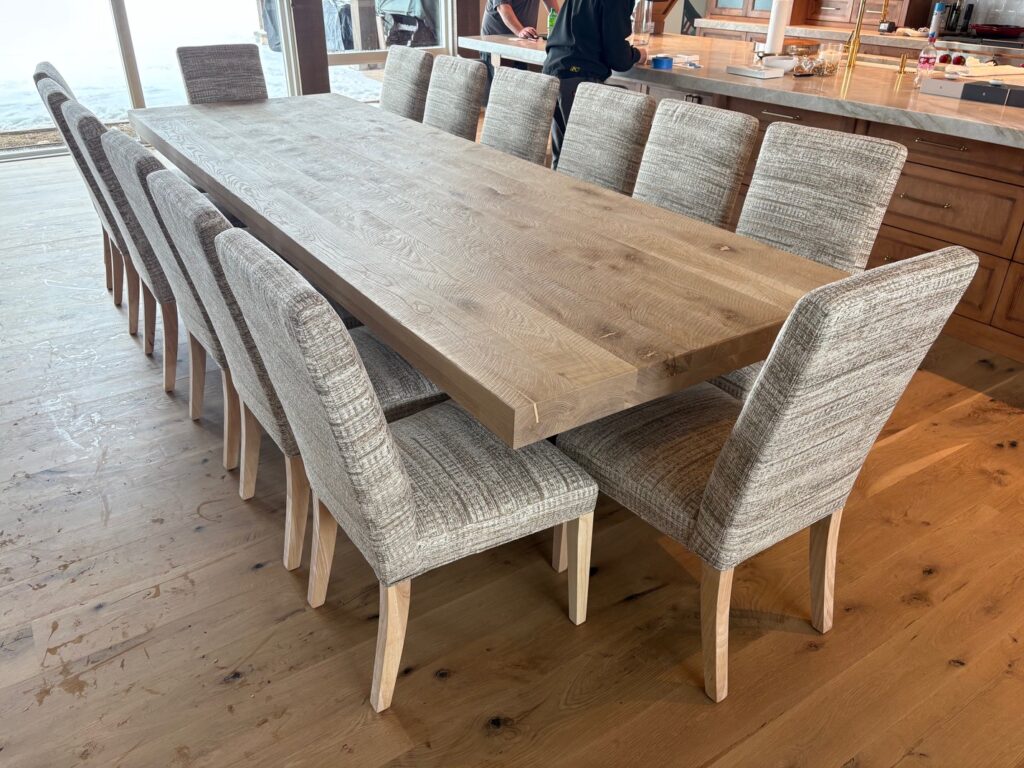
A dining table may serve six people most days and suddenly need room for ten or twelve during holidays. An extension table solves that problem without filling the room with an oversized surface every day. But making a table longer is not as simple as adding another board. The base, slides, leaves, support, and leg positions all have to work together so the table remains stable in both sizes.
The Extension System Has to Carry Real Weight
When a table opens, part of the top moves away from its normal support points. The extension mechanism must keep both halves aligned while supporting dishes, serving pieces, and people leaning against the edge.
In well-made custom furniture, the extension system is selected around the exact table size rather than treated as an accessory added later.
A designer has to consider:
- How far the table will extend
- How many leaves will be added
- Where the weight will be supported
- How smoothly the sections need to move
A long table may require a stronger slide system or additional support beneath the extended surface.
Leaf Storage Should Be Planned From the Start
Extra leaves need somewhere safe to go when they are not in use. Some tables can store them inside the structure, while other designs require separate storage.
Built-in storage is convenient, but it takes space beneath the tabletop and may affect the base design. Separate leaves can allow a cleaner structure but need to be stored flat and protected from major humidity changes.
Understanding how custom extension dining tables are engineered means considering both the open and closed table. Neither version should feel like a compromise.
The grain and color of the leaves should also be planned carefully so the expanded tabletop still looks intentional.
The Base Cannot Interfere With Extra Seating
A table may become longer, but that does not automatically mean every new seat will be comfortable. Pedestals, trestles, and legs can end up directly where guests need knee room.
For clients looking at Highland UT custom furniture, we first consider how many people should sit comfortably when the table is fully extended. The base can then be positioned around those seating locations.
Some designs allow the base to move as the tabletop expands. Others use fixed supports placed carefully enough to work in both configurations. Either way, legroom should be tested before the final proportions are set.
Strength Still Matters When the Table Is Closed
An extension table should not feel loose or complicated during everyday use. When closed, the seams should align cleanly and the structure should feel as solid as a fixed table.
This is where true custom furniture craftsmanship becomes important. The tabletop, joinery, slides, base, and hardware are designed as one system instead of separate parts.
At Fox In The Sawdust, we also consider how often the table will be opened. A family that extends it every weekend may need a different mechanism from someone who uses the leaves only during holidays.
Conclusion
A great extension table should change size without changing character. Strong support, smooth movement, comfortable legroom, and well-planned leaves allow one table to serve both everyday meals and larger celebrations. Call Fox In The Sawdust at (208) 360-6348 and let us build a solid-wood extension table designed to gather more people whenever the occasion calls for it.