
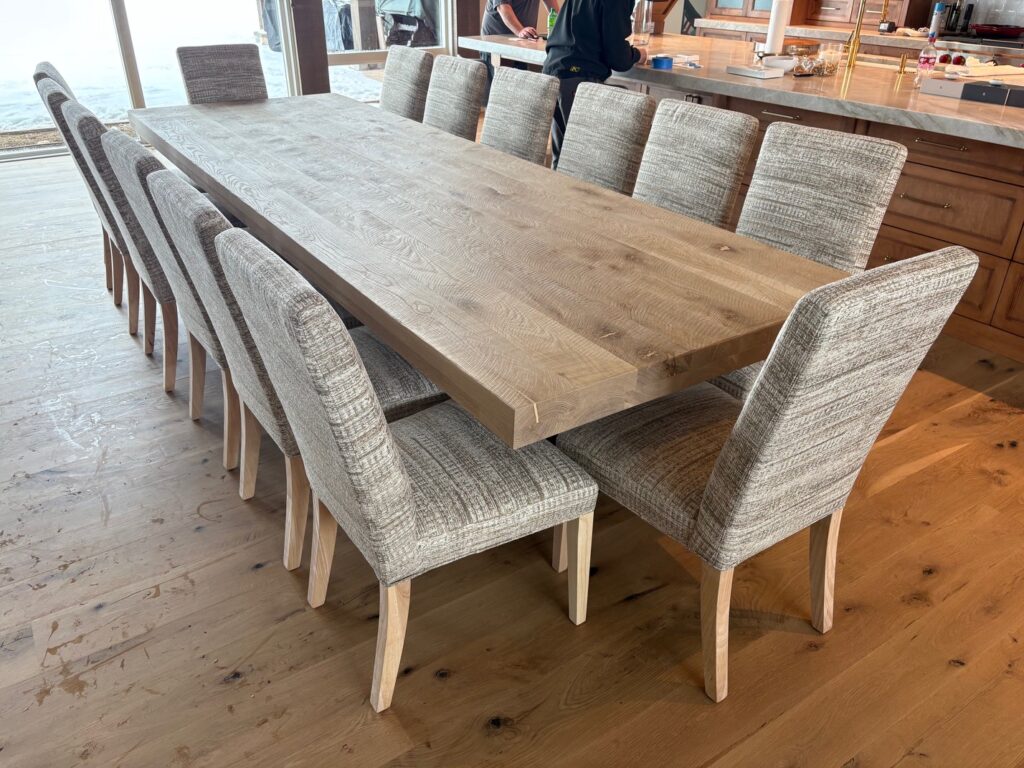
In fine furniture, strength is rarely visible at first glance. The most important elements are often hidden where boards meet, where weight transfers, and where movement is controlled. Joinery is the quiet foundation that allows a piece to endure daily use while maintaining its elegance.
True craftsmanship does not rely on shortcuts. It relies on thoughtful connections that allow wood to work naturally and remain stable for generations.
Where Strength Begins: Wood-to-Wood Connections
Handcrafted joinery begins long before pieces are assembled. It starts with understanding how wood responds to pressure, weight, and seasonal change. Every joint must support structural load while also allowing natural expansion and contraction. The goal is not simply attachment; it is structural unity. This level of construction often requires:
- Shaping joints that resist pulling and twisting forces
- Allowing calculated space for seasonal movement
- Transferring weight evenly across the frame
- Removing stress points from high-contact areas
When joints are engineered properly, the entire piece behaves as a single structure. The result is furniture that feels steady and substantial without relying on excessive bulk.
Traditional Methods That Stand the Test of Time
Some construction techniques have endured for centuries because they offer structural solutions that modern shortcuts cannot match. Traditional joinery relies on precision shaping and tight tolerances rather than visible hardware. Among the most respected methods are:
- Mortise and tenon joints for load-bearing strength
- Dovetail connections that resist separation under pressure
- Tongue-and-groove panels that accommodate natural expansion
- Floating joinery systems that reduce cracking and stress
These methods represent the foundation of types of joinery used in high-end furniture, where craftsmanship is measured in decades, not production speed. Precision shaping and hand-fitting ensure long-term integrity.
Craftsmanship You Can Feel, Not Just See
The quality of joinery reveals itself through experience. A properly built chair does not shift when leaned back. A dining table remains grounded even under heavy use. This sense of stability is not accidental; it is the direct result of carefully executed joints. Exceptional craftsmanship becomes noticeable through:
- Seamless transitions where components meet
- Tight-fitting connections free from visible gaps
- Consistent structural alignment throughout the piece
- Even weight distribution across legs and stretchers
Clients seeking Rigby ID custom furniture often sense this difference immediately. The confidence a piece conveys comes from what lies beneath the finish.
Designing for Generational Performance
Joinery is not simply about assembly; it is about longevity. By respecting the natural properties of wood, handcrafted joints prevent long-term structural stress. This foresight reduces the risk of warping, separation, and joint failure. Thoughtful structural planning may account for:
- Seasonal humidity variation
- Load-bearing stress across decades of use
- Reinforcement in high-contact and high-pressure areas
- Structural flexibility without compromising strength
This philosophy defines enduring custom furniture. The objective is not only durability but continuity, creating pieces that remain stable and beautiful across generations.
Final Thoughts
Handcrafted joinery reflects patience, skill, and a commitment to lasting quality. It transforms wood into something that grows stronger through use rather than weaker. At Fox In The Sawdust, we build custom furniture where every joint is designed to endure, and every detail serves a purpose.
If you value craftsmanship that stands the test of time, contact Fox In The Sawdust at (208) 360-6348 today and let us create something truly exceptional.