
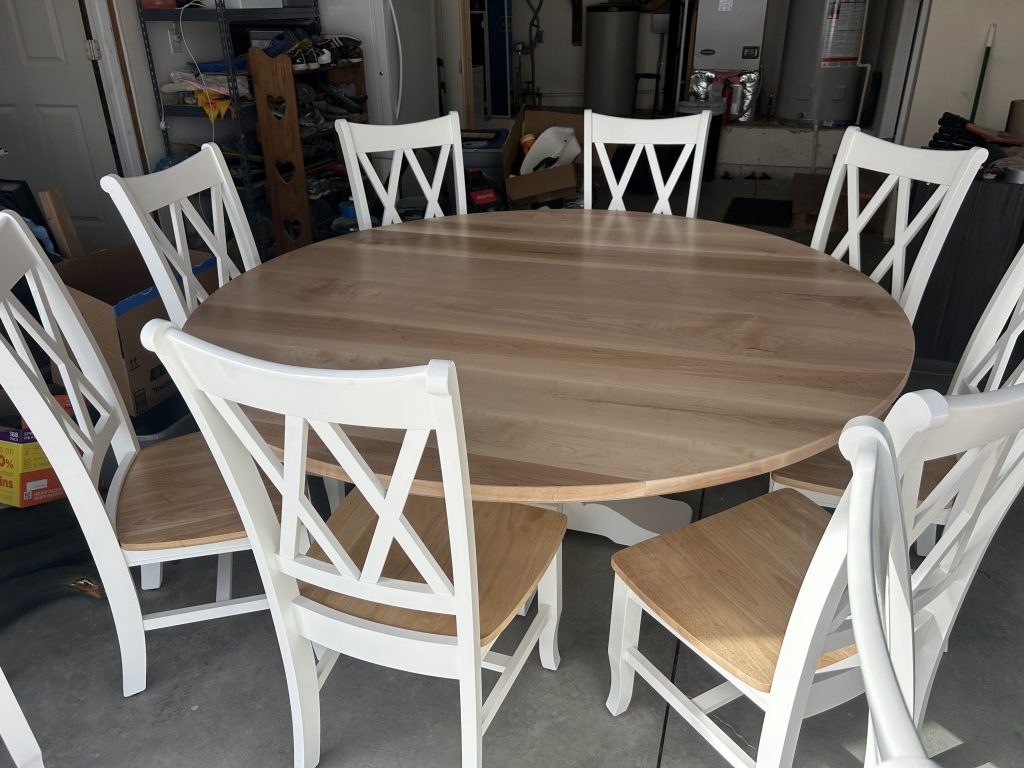
A solid-wood dining table is not a lifeless object. Even after the tree has been cut, dried, and shaped, the wood continues to react to the air around it. As humidity rises and falls, boards can expand or contract slightly.
This movement is normal. The difference between a table that ages gracefully and one that develops problems often comes down to how the maker plans for that movement from the very beginning.
Real Wood Needs Room to Move
Wood absorbs and releases moisture from the surrounding air. Most of that movement happens across the width of a board rather than along its length.
That means a wide tabletop may become slightly wider during humid periods and narrower when the air becomes dry. Quality custom furniture should be built with this natural behavior in mind rather than trying to prevent the wood from moving completely.
A few things influence how much movement occurs:
- Wood species and board width
- Indoor humidity levels
- Grain direction
- How the tabletop is attached to its base
The goal is not to stop movement. It is to give the wood a safe way to move.
Tabletop Attachment Makes a Major Difference
One of the most important details is how the top connects to the base. If a wide solid-wood top is locked rigidly in every direction, the boards may have nowhere to go when they expand or contract.
Understanding how to prevent solid wood dining tables from cracking starts with allowing controlled movement. Furniture makers can use attachment methods that hold the top securely while still letting it shift slightly across the grain.
Good joinery also matters. Well-fitted joints help the table remain strong while working with the wood instead of fighting against it.
Dry Indoor Air Deserves Extra Attention
Utah homes may become very dry during parts of the year, especially when heating systems run for long periods. Sudden changes in indoor humidity can place more stress on solid wood.
When someone is considering Salt Lake City custom furniture, we believe this should be part of the conversation before the first board is selected. At Fox In The Sawdust, we look at the wood species, tabletop size, grain pattern, construction method, and the environment where the finished piece will live.
Homeowners can also help by keeping indoor humidity reasonably stable instead of allowing extreme swings from one season to another.
Great Craftsmanship Works With the Material
A beautiful table begins with more than choosing attractive lumber. Boards need to be selected, arranged, joined, and finished with long-term performance in mind.
True custom furniture allows the maker to control details that mass-produced pieces often overlook. Grain can be arranged for visual balance, joinery can suit the size of the table, and the base can be designed specifically to support the top without restricting it.
That level of planning is part of what gives a handcrafted piece its lasting value.
Conclusion
Seasonal wood movement is natural, but cracking, splitting, and failed joints should not be accepted as unavoidable. Careful lumber selection, proper joinery, smart tabletop attachment, and thoughtful finishing can help a solid-wood dining table remain beautiful for generations. For a one-of-a-kind table built with respect for the material, call Fox In The Sawdust at (208) 360-6348 and let us create a piece made to live beautifully in your home.