
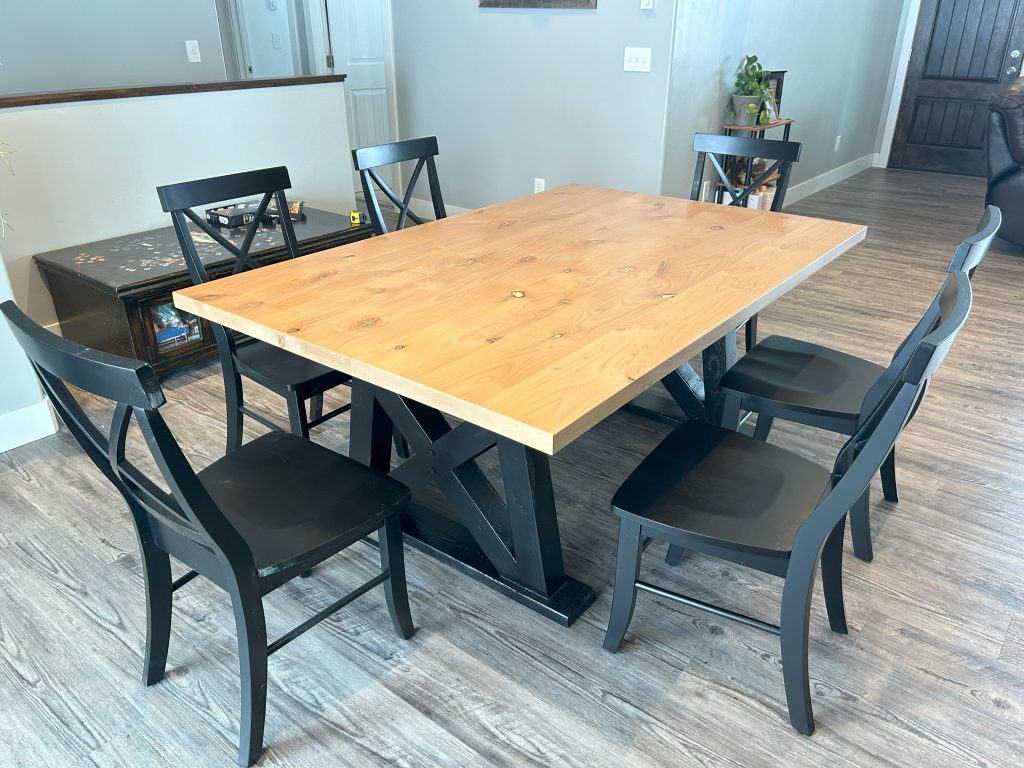
Ever look at a beautiful table and wonder if it’s solid wood or a high-end veneer? Both can look stunning, but they perform differently over time. This guide breaks things down simply—how each is built, how it wears, and when one choice might serve you better. Read on and feel confident about your next custom furniture piece.
How Each One Is Built—and Why It Matters
Solid wood is exactly what it sounds like: boards glued and joined into a top, apron, and legs. Veneer is a thin slice of real wood laid over a stable core (often plywood or MDF) and pressed flat. Both use real wood on the surface; the difference is beneath the grain.
- Solid tops can be flattened and refinished again and again.
- Veneer lets you use rare or dramatic figure across a wide surface without warping.
- Core quality is key with veneer—premium cores stay flat and strong.
Think of construction like the table’s backbone: it sets the tone for durability, weight, and long-term care.
Look and Feel: Grain, Edges, and Touch
If you love a hand-sanded edge and a natural, “warm to the touch” feel, solid wood shines. The edge reveals real grain all the way through. Veneer offers incredible design control with book-matched patterns, straight “architectural” grain, or mirrored figures often at a lighter weight.
- Solid edges feel rounded and organic; the look is timeless.
- Veneer excels at ultra-clean modern lines with perfect symmetry.
- Both take fine finishes beautifully when prepped by a skilled shop.
Many clients search solid wood vs veneer dining table pros and cons because both options can look luxe; choosing comes down to the look you want and how you live.
Durability, Movement, and Everyday Life
Wood moves with seasons—solid boards expand and contract across the grain. A well-built solid top uses breadboard ends, balanced glue-ups, and the right joinery to stay true. Veneer over a stable core barely moves at all, which helps big, wide tops stay perfectly flat.
- Solid wood can be sanded and refinished many times over decades.
- Veneer resists warping on very large panels but needs thoughtful care to avoid deep gouges.
- Finish choice matters: hard film finishes protect busy households; oil finishes are easy to refresh.
If you want heirloom mass and deep edge profiles, solid wood wins. For ultra-large surfaces that must stay laser-flat, veneer can be the smarter custom furniture solution.
When you’re ready for a statement piece with meticulous craftsmanship, Ammon ID custom furniture brings both options to a luxury standard.
When to Choose Which: Simple Use-Case Guide
Match the material to the job and the room.
- Solid wood is ideal for: family dining tables, thicker edge profiles, live-edge designs, and pieces you plan to refinish over time.
- Veneer is ideal for: extra-wide conference-style tables, uniform modern grain, waterfall bases, and lighter pieces on upper floors.
- Chairs & storage: solid frames for strength; veneer panels for clean lines and weight control.
The sweet spot is often a blend—solid legs and edges with veneer center panels for size or stability. The craft is in the joinery, the core quality, and the finishing.
Conclusion
Both solid wood and veneer can be truly high-end when they’re built and finished right. Tell us how you live, what look you love, and how you’ll use the piece—we’ll design the best path. Ready to turn an idea into an heirloom? Call Fox In The Sawdust at (208) 360-6348—let’s create a one-of-a-kind piece that feels special from day one and ages beautifully.