March 2026

Integrating Custom Furniture Into Luxury Architectural Design

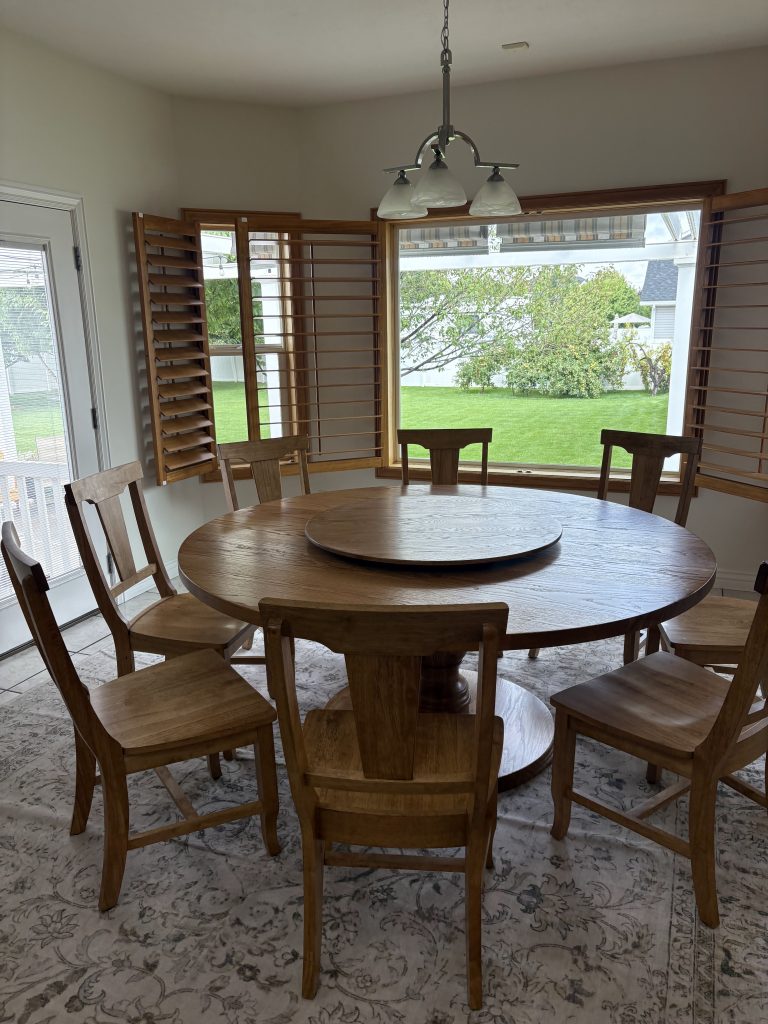
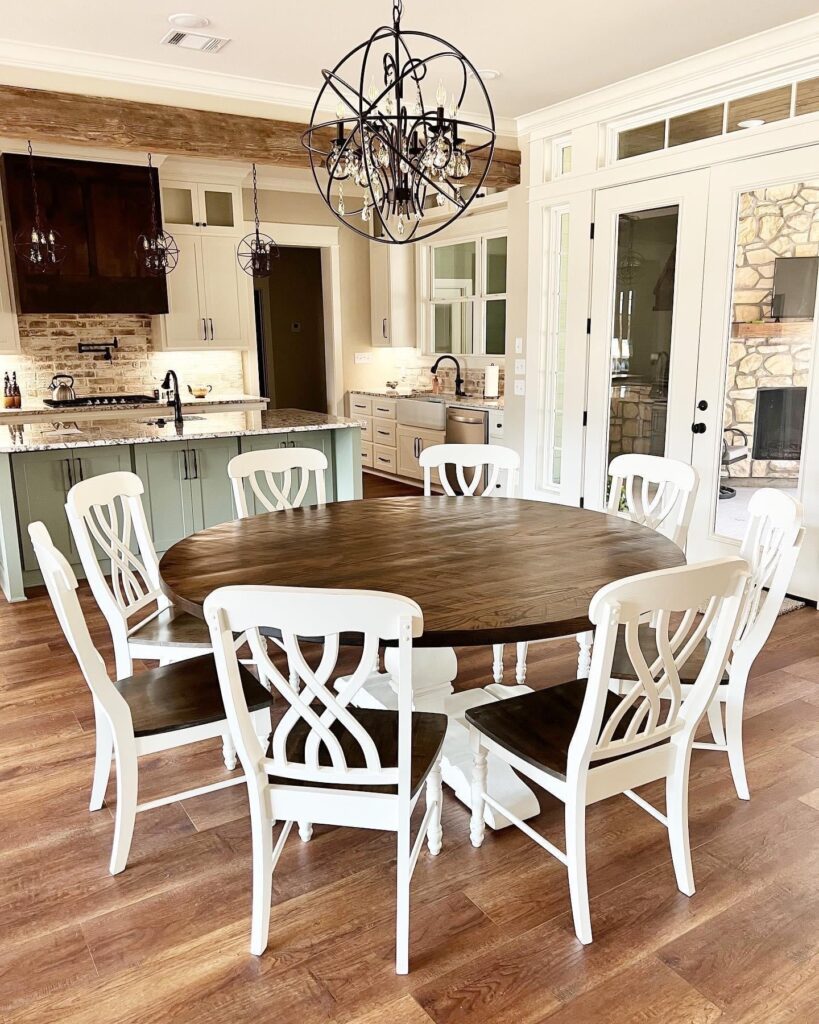
In high-end homes, furniture should never feel like an afterthought. It should feel as though it belongs to the architecture itself. When scale, material, and structure are aligned with the home’s design, the result is seamless and intentional.

Luxury interiors demand more than decorative pieces. They require furnishings that respond to ceiling height, window placement, natural light, and architectural detail. When these elements are considered together, the space feels complete rather than furnished. True integration begins with planning—not selection.

Designing in Conversation With the Architecture

Every luxury home carries a distinct architectural language. Exposed beams, expansive glass walls, vaulted ceilings, and natural stone features create rhythm and structure within the space. Furniture must respond to that language rather than interrupt it.

Architectural alignment often requires:

  • Matching wood tones to existing flooring or millwork
  • Designing scale appropriate to ceiling height and room volume
  • Echoing structural lines found in beams, trim, or window framing
  • Balancing visual weight within open-concept layouts

When furniture mirrors the proportions and materials already present, the entire space feels intentional. Instead of drawing attention away from architectural features, the piece reinforces them.

Proportion as a Design Tool

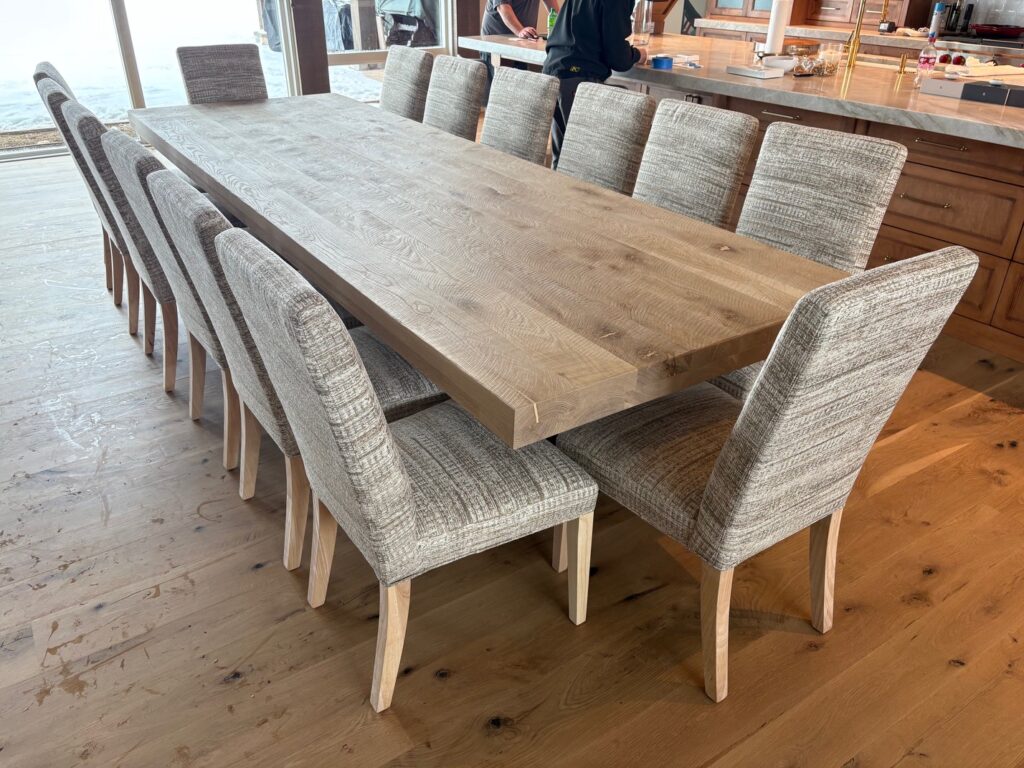
In large mountain residences, proportion becomes a defining element. A table that appears modest in a showroom may look undersized beneath vaulted ceilings. Conversely, excessive mass can overwhelm a more intimate dining space. Thoughtful proportional planning considers:

  • Table length relative to overall room depth
  • Leg thickness that visually aligns with exposed beams
  • Chair height that complements window and sight lines
  • Surface thickness that matches the architectural scale

Many homeowners exploring custom furniture for luxury home design come to realize that proportion shapes how a room feels. Balanced dimensions create harmony, while poorly scaled pieces disrupt flow.

Material Selection That Complements the Environment

Mountain homes often blend natural materials with refined finishes. Stone fireplaces, steel accents, reclaimed timbers, and wide-plank floors establish a strong visual foundation. Your custom furniture must coexist with these elements without losing its own presence. Material coordination may involve:

  • Selecting hardwood species that complement flooring tones
  • Choosing finishes that react beautifully to natural light
  • Orienting grain patterns to echo architectural direction
  • Specifying durable surfaces suited for frequent entertaining

Clients seeking Moose WY custom furniture often look for pieces that feel rooted in the landscape—strong, organic, and thoughtfully refined.

Collaboration From Concept to Completion

Seamless integration rarely happens by accident. It requires early collaboration between the homeowner, architect, designer, and craftsman. Considering furniture during the architectural phase allows dimensions and details to align from the start. This collaborative process often includes:

  • Reviewing architectural drawings and elevations
  • Refining proportions before fabrication begins
  • Coordinating installation with construction timelines
  • Engineering structural details tailored to the specific space

At this level, custom furniture becomes structural in presence, not merely decorative. It belongs to the home as naturally as the beams overhead or the stone beneath it.

Final Thoughts

When furniture is designed alongside architecture, the result feels effortless and cohesive. It supports the space rather than competing with it. At Fox In The Sawdust, we work closely with homeowners and designers to create pieces that belong within the architecture they inhabit.

If you are building or refining a luxury space, call Fox In The Sawdust at (208) 360-6348 and let us craft furniture that completes your vision.

Integrating Custom Furniture Into Luxury Architectural Design Read More »
The Role of Handcrafted Joinery in Luxury Furniture

In fine furniture, strength is rarely visible at first glance. The most important elements are often hidden where boards meet, where weight transfers, and where movement is controlled. Joinery is the quiet foundation that allows a piece to endure daily use while maintaining its elegance.

True craftsmanship does not rely on shortcuts. It relies on thoughtful connections that allow wood to work naturally and remain stable for generations.

Where Strength Begins: Wood-to-Wood Connections

Handcrafted joinery begins long before pieces are assembled. It starts with understanding how wood responds to pressure, weight, and seasonal change. Every joint must support structural load while also allowing natural expansion and contraction. The goal is not simply attachment; it is structural unity. This level of construction often requires:

  • Shaping joints that resist pulling and twisting forces
  • Allowing calculated space for seasonal movement
  • Transferring weight evenly across the frame
  • Removing stress points from high-contact areas

When joints are engineered properly, the entire piece behaves as a single structure. The result is furniture that feels steady and substantial without relying on excessive bulk.

Traditional Methods That Stand the Test of Time

Some construction techniques have endured for centuries because they offer structural solutions that modern shortcuts cannot match. Traditional joinery relies on precision shaping and tight tolerances rather than visible hardware. Among the most respected methods are:

  • Mortise and tenon joints for load-bearing strength
  • Dovetail connections that resist separation under pressure
  • Tongue-and-groove panels that accommodate natural expansion
  • Floating joinery systems that reduce cracking and stress

These methods represent the foundation of types of joinery used in high-end furniture, where craftsmanship is measured in decades, not production speed. Precision shaping and hand-fitting ensure long-term integrity.

Craftsmanship You Can Feel, Not Just See

The quality of joinery reveals itself through experience. A properly built chair does not shift when leaned back. A dining table remains grounded even under heavy use. This sense of stability is not accidental; it is the direct result of carefully executed joints. Exceptional craftsmanship becomes noticeable through:

  • Seamless transitions where components meet
  • Tight-fitting connections free from visible gaps
  • Consistent structural alignment throughout the piece
  • Even weight distribution across legs and stretchers

Clients seeking Rigby ID custom furniture often sense this difference immediately. The confidence a piece conveys comes from what lies beneath the finish.

Designing for Generational Performance

Joinery is not simply about assembly; it is about longevity. By respecting the natural properties of wood, handcrafted joints prevent long-term structural stress. This foresight reduces the risk of warping, separation, and joint failure. Thoughtful structural planning may account for:

  • Seasonal humidity variation
  • Load-bearing stress across decades of use
  • Reinforcement in high-contact and high-pressure areas
  • Structural flexibility without compromising strength

This philosophy defines enduring custom furniture. The objective is not only durability but continuity, creating pieces that remain stable and beautiful across generations.

Final Thoughts

Handcrafted joinery reflects patience, skill, and a commitment to lasting quality. It transforms wood into something that grows stronger through use rather than weaker. At Fox In The Sawdust, we build custom furniture where every joint is designed to endure, and every detail serves a purpose.

If you value craftsmanship that stands the test of time, contact Fox In The Sawdust at (208) 360-6348 today and let us create something truly exceptional.

The Role of Handcrafted Joinery in Luxury Furniture Read More »

Designing Custom Dining Tables Around Proportion and Scale

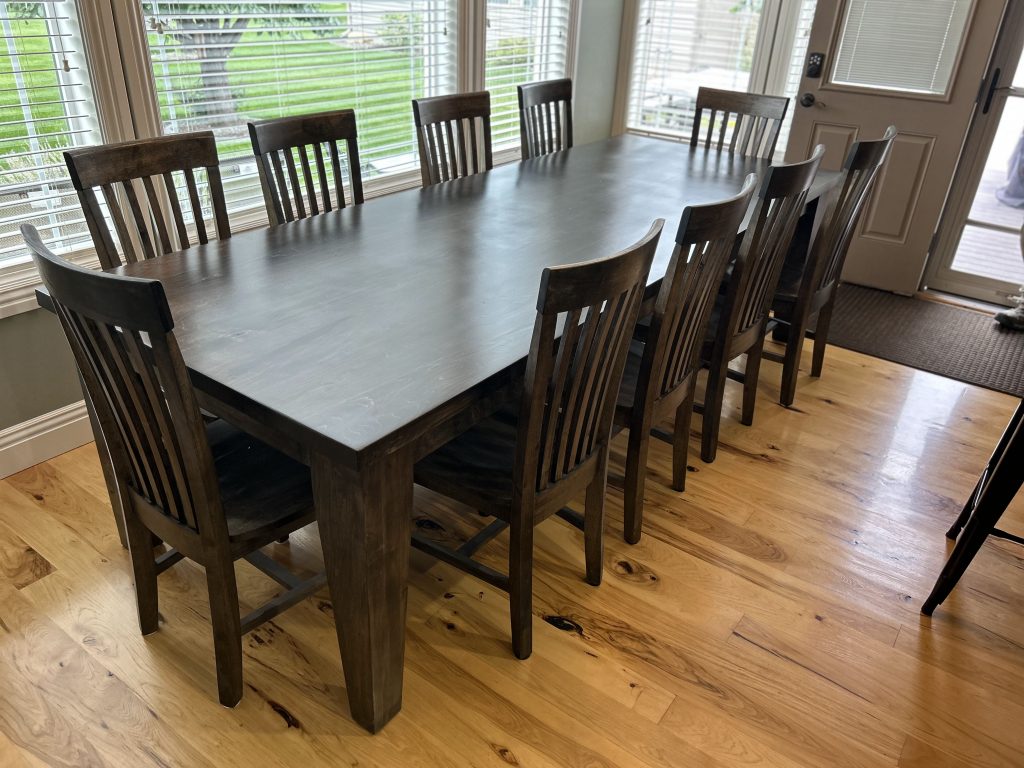
A dining table does more than fill a room. It shapes how people gather, move, and experience a space. When proportion and scale are thoughtfully considered, a table feels natural—almost as if it has always belonged there.

Many homeowners focus first on style, but the true success of a dining table begins with how it fits the room itself. Ceiling height, wall spacing, lighting, and surrounding furniture all influence the final design. Good proportion creates comfort, balance, and long-term usability.

Understanding the Relationship Between Table and Room

A well-designed table respects the room around it. Too large, and the space feels crowded. Too small, and it loses presence. The goal is harmony between the furniture and its environment. Key spatial factors to evaluate include:

  • Room dimensions and traffic flow
  • Distance from walls and doorways
  • Natural light and visual openness
  • Placement of windows and architectural features

When considering how to size a dining table for your space, allowing enough movement around the table is just as important as the table itself.

Choosing Dimensions That Support Daily Use

Function matters as much as aesthetics. A table should comfortably support gatherings without forcing guests into tight or awkward spacing. Proper dimensions make the difference between a table that is admired and one that is truly enjoyed. Important design considerations include:

  • Adequate width for place settings and serving
  • Comfortable spacing between chairs
  • Proper height relative to seating
  • Overhang for legroom and comfort

Thoughtful measurements ensure the table feels welcoming during everyday meals and special occasions alike.

Balancing Thickness and Visual Weight

The thickness of a tabletop and the scale of its base influence how substantial the piece feels. In luxury interiors, proportion is often subtle but intentional. Here are the design elements that shape visual balance:

  • Tabletop thickness in relation to length
  • Base design that supports without overwhelming
  • Leg placement that enhances stability
  • Edge profiles that soften the overall form

Clients searching for Rigby ID Custom Furniture often value this balance between presence and refinement. A table should feel grounded without appearing heavy.

Designing With Longevity in Mind

True custom work considers not only how a table looks today, but how it will perform over time. Proportion affects durability just as much as aesthetics. Long-term structural planning may involve:

  • Reinforced support for extended spans
  • Allowance for seasonal wood movement
  • Durable joinery that resists shifting
  • Stable base construction for daily use

Well-planned proportion ensures the table remains functional and beautiful for decades. This level of care defines exceptional custom furniture.

Conclusion

Designing a dining table around proportion and scale transforms it from furniture into a centerpiece. When structure, comfort, and visual balance work together, the result feels effortless and timeless. At Fox In The Sawdust, we create solid wood dining tables and custom furniture designed to fit your space with precision and purpose.

If you are ready for a table that truly belongs in your home, get in touch with Fox In The Sawdust at (208) 360-6348 and let us craft something remarkable.

Designing Custom Dining Tables Around Proportion and Scale Read More »

Built to Last: The Hidden Structure Behind True Heirloom Furniture

Heirloom furniture is not built for seasons. It is built for a lifetime. Anyone can shape wood into a table. Few can craft a piece that remains strong, stable, and beautiful after decades of daily use. The difference is not surface detail. It is structure. It is the hidden decisions that determine whether a piece becomes disposable—or enduring.

In our shop, we build with permanence in mind. Every cut, every joint, every board is selected for strength before beauty ever enters the conversation.

Solid Wood That Works With Nature, Not Against It

Heirloom pieces begin with solid hardwood—never veneers or hollow construction. Solid wood carries weight, character, and integrity. But choosing hardwood is only the beginning. We evaluate every board based on:

  • Grain direction for structural stability
  • Moisture content before milling
  • Natural density and durability
  • Visual harmony across the entire piece

Wood expands and contracts with the seasons. If that movement is ignored, cracking and warping follow. Understanding what makes furniture heirloom quality starts with building in a way that allows the material to breathe without weakening the structure.

Joinery That Locks Strength Into the Frame

Fasteners can hold temporarily. True strength comes from interlocking joinery that binds wood to wood without relying on surface hardware. Our heirloom construction often relies on:

  • Mortise and tenon joints for load-bearing strength
  • Dovetail joinery for long-term drawer stability
  • Floating panels that allow seasonal expansion

These methods require precision and patience. When executed correctly, they create pieces that remain tight and secure year after year. That level of structural integrity defines exceptional custom furniture.

Weight, Proportion, and Structural Balance

Luxury furniture should feel grounded the moment you touch it. A dining table should not shift under pressure. A chair should not creak when weight is applied. Structural balance is achieved through careful planning, such as:

  • Proper leg placement to distribute load evenly
  • Reinforced stretchers beneath tabletops
  • Thoughtful apron depth for added strength

When clients search for Rigby ID custom furniture, they are often looking for substance—something solid and enduring. That sense of permanence comes from thoughtful engineering beneath the visible design.

Craft Built for Legacy

There is a difference between furniture that fills a room and furniture that defines it. Heirloom pieces carry stories. They host gatherings. They age with dignity. In our work, custom furniture is created with legacy in mind. We focus on:

  • Structural longevity over trend-driven styling
  • Timeless design that transcends fads
  • Craftsmanship that improves with age

Heirloom quality is never accidental. It is built into every cut, every joint, and every decision.

Final Thoughts

Heirloom furniture is defined by what you cannot immediately see—strength inside the joints, balance in the frame, and wood chosen for generations. At Fox In The Sawdust, we craft solid wood pieces that are meant to be passed down, not replaced.

If you’re ready to invest in lasting craftsmanship, call Fox In The Sawdust at (208) 360-6348 today and let us create something worthy of becoming part of your family’s story.

Built to Last: The Hidden Structure Behind True Heirloom Furniture Read More »

Call Now!